
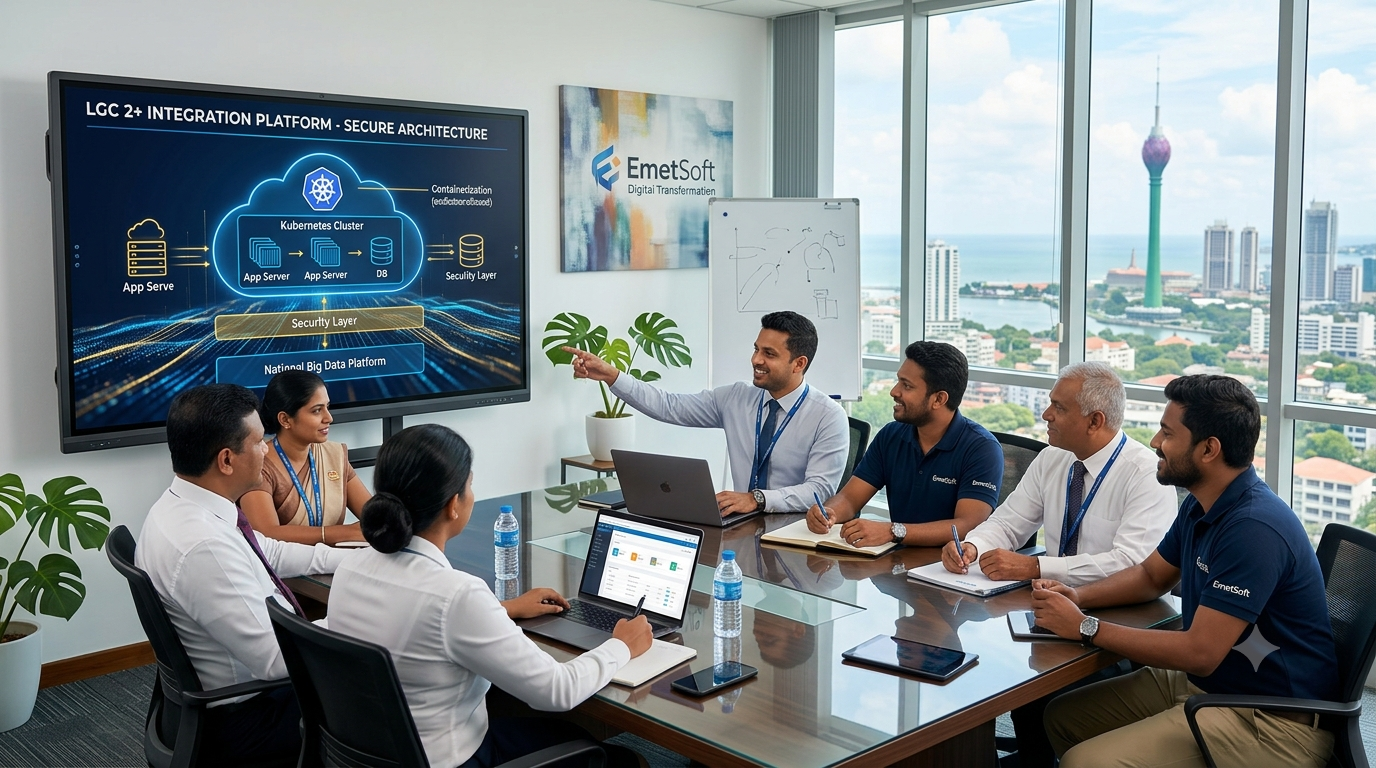
Accelerating Public Sector Innovation: Seamlessly Integrating with Lanka Government Cloud Version 2+
The global paradigm shift in public administration demands absolute agility, unwavering security, and data-driven continuity. In alignment with Sri Lanka’s national policy for the “Digitization of the Economy,” local government institutions can no longer rely on fragmented legacy hostings or localized server silos. The modern public ecosystem requires an industrial-grade foundational layer. To bridge this critical requirement, the central public cloud infrastructure has evolved into a fully fledged, hyper-scalable architecture: the Lanka Government Cloud Version 2+ (LGC 2+). Designed to cater to the exponentially increasing operational requirements of statutory bodies, LGC 2+ stands as the definitive national environment for cost-effective, hyper-secure public service delivery.
By transitioning state entities away from scattered local databases to a highly standardized environment, LGC 2+ creates a unified framework for inter-departmental collaboration, removing standard infrastructural barriers. This milestone upgrade provides government organizations with an unprecedented opportunity to modernize their application layers, ensuring public data works optimally for the citizens it is meant to serve.
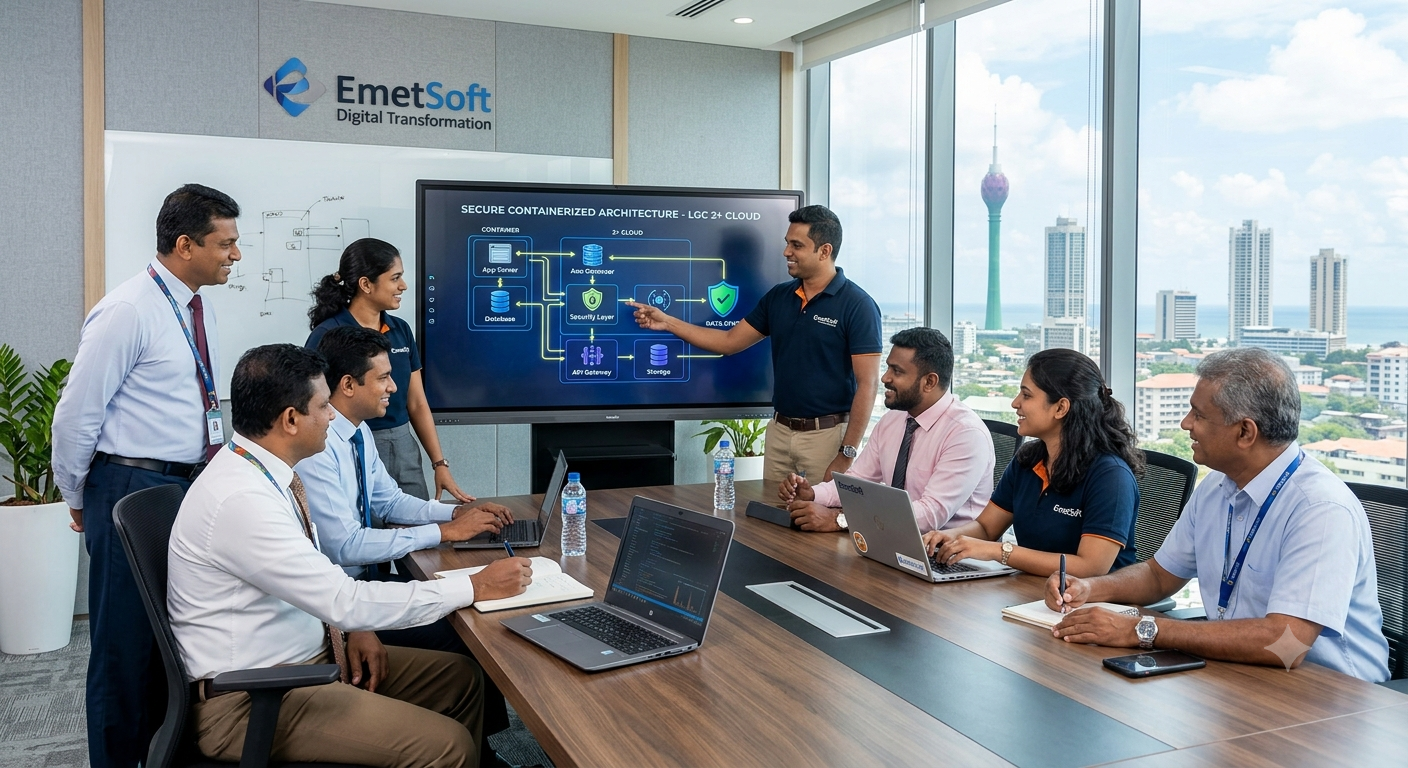
Understanding the Architecture: What Makes LGC 2+ Essential?
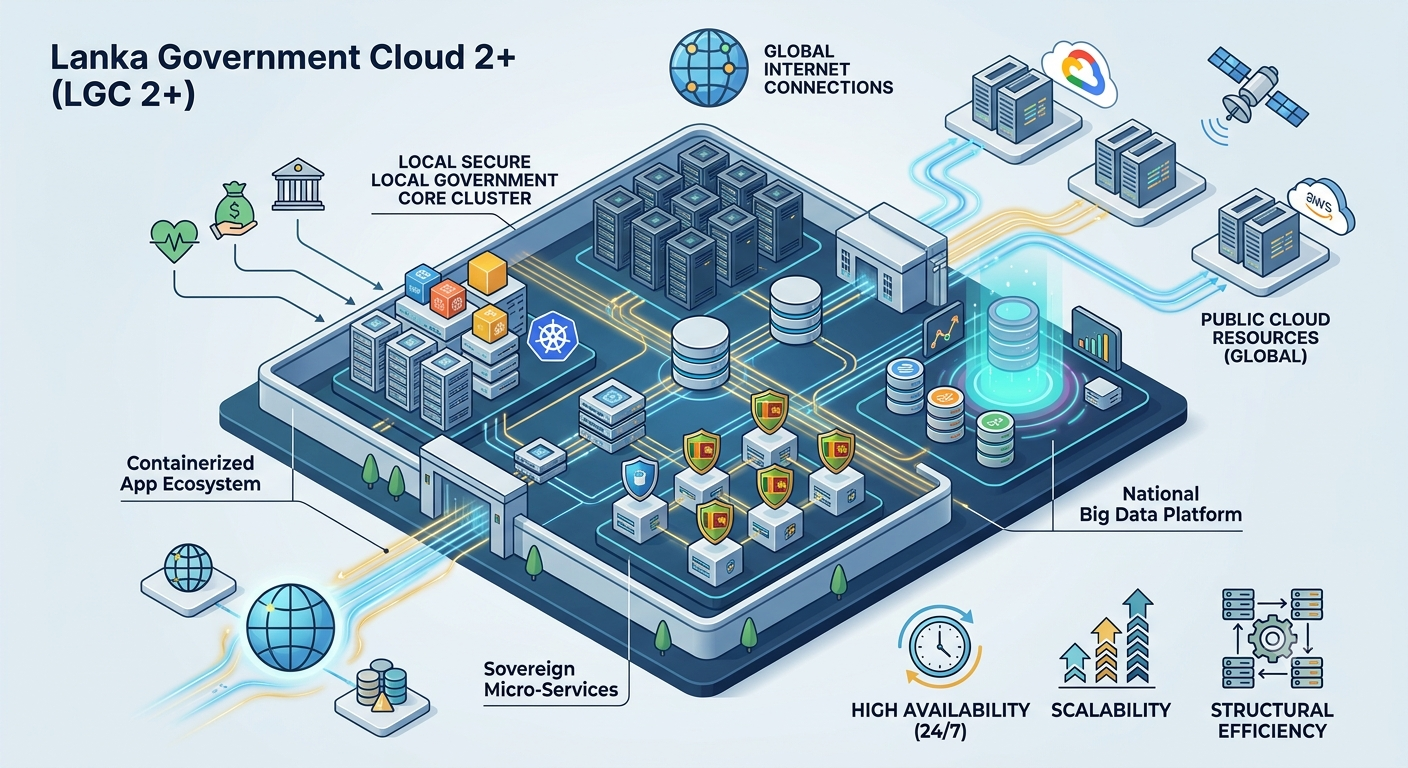
LGC 2+ is structured intentionally to move past the limitations of traditional, rigid hosting models. At its operational core, LGC 2+ implements a sophisticated hybrid cloud framework. This architectural strategy allows state systems to retain critical administrative data within localized, sovereign boundaries while safely leveraging the massive, high-performance global public cloud networks for external, high-volume public transactions.
Key Structural Pillar: Native Containerization Support
By utilizing native container systems, LGC 2+ facilitates complete micro-service isolation. This ensures that application processes run independently without resource conflict, yielding optimal computational efficiency, rapid scalability during heavy traffic periods, and instantaneous deployment of mission-critical upgrades.
By utilizing native container systems, LGC 2+ facilitates complete micro-service isolation. This ensures that application processes run independently without resource conflict, yielding optimal computational efficiency, rapid scalability during heavy traffic periods, and instantaneous deployment of mission-critical upgrades.
Furthermore, LGC 2+ introduces a powerful, centralized National Big Data Platform cluster. Historically, public sector data has been trapped within functional silos—isolated across land registries, municipal councils, and treasury networks. The big data cluster embedded within LGC 2+ provides the analytical infrastructure required to perform cross-departmental data management, modeling, and real-time processing, laying the technical foundation for predictive governance and optimized national resource allocation.
The Structural Benefits of Mandatory Cloud Migration
Adopting LGC 2+ brings definitive operational benefits that translate into structural resilience and fiscal pragmatism for any government organization:
- Unmatched Cost-Effectiveness: Eliminates capital expenditure (CAPEX) associated with purchasing, housing, and cooling physical local servers, converting infrastructure maintenance into a predictable public utility model.
- Elastic Scalability: Dynamic resource adjustment guarantees that local government services remain live, responsive, and secure even during high-demand periods like annual tax deadlines or public subsidy distributions.
- Regulatory Data Sovereignty: Safeguards sensitive citizen records within state-monitored digital perimeters, strictly adhering to regional privacy mandates and local electronic transactions guidelines.
- High-Availability Disaster Recovery: Geographically distributed redundancy protocols ensure that if one node faces an unexpected hardware failure, automated failover routes prevent service downtime.
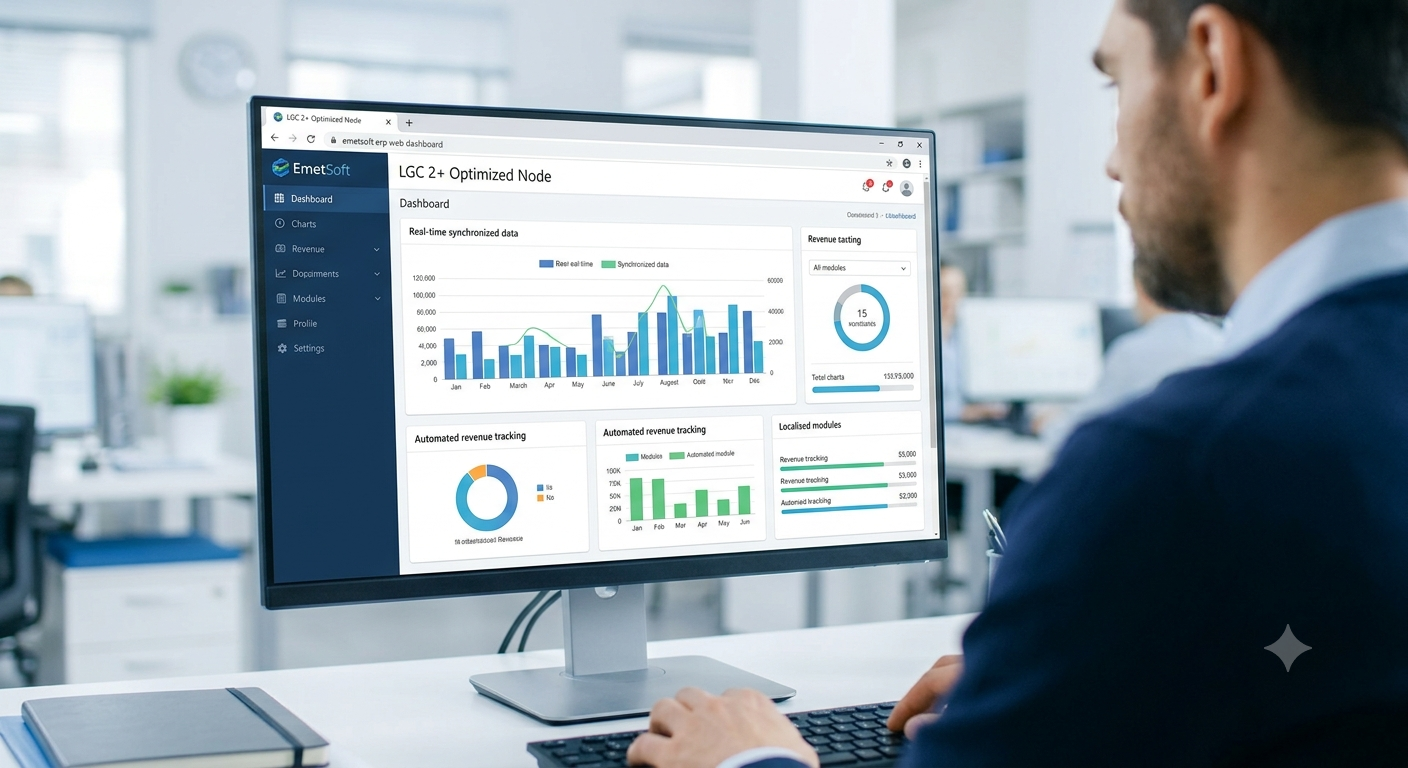
How EmetSoft Orchestrates Your Transition to LGC 2+
Deploying applications into a highly advanced hybrid cloud ecosystem requires precise software engineering, deep compliance mapping, and proven deployment experience. As the undisputed pioneer in building specialized local authority platforms and enterprise solutions, EmetSoft acts as your strategic partner for complete cloud transformation.
Our capabilities are already proven at the highest levels of state infrastructure. In a landmark nationwide project, EmetSoft successfully migrated the entire infrastructure of the Prisoner Information Management System (PIMS) from the legacy LGC 2.0 platform to the advanced architecture of LGC 2+. This critical transition was executed smoothly, securing highly sensitive public data while significantly boosting cross-departmental operational performance across the island.
Building on this national success, EmetSoft is expanding its migration roadmap. We are currently finalizing strategic plans to migrate major, high-volume municipal councils—including the Dehiwala-Mount Lavinia Municipal Council (DMMC)—to the LGC 2+ platform. This initiative will serve as the master blueprint for transitioning other vital public institutions, statutory bodies, and local government authorities into the new ecosystem.
To support these massive integrations, EmetSoft has systematically re-engineered its core product portfolio—including our specialized Local Government Authority (LGA) revenue management systems, specialized financial modules, and localized citizen-centric applications—to be fundamentally cloud-native. Our dedicated technical teams handle the entire modernization lifecycle: from auditing legacy application code and decomposing monolith structures into containerized micro-services, to securely executing migration pathways with zero operational data loss. By optimizing resource orchestration, we ensure your organization achieves maximum processing speeds while minimizing cloud utility consumption charges on the central network.
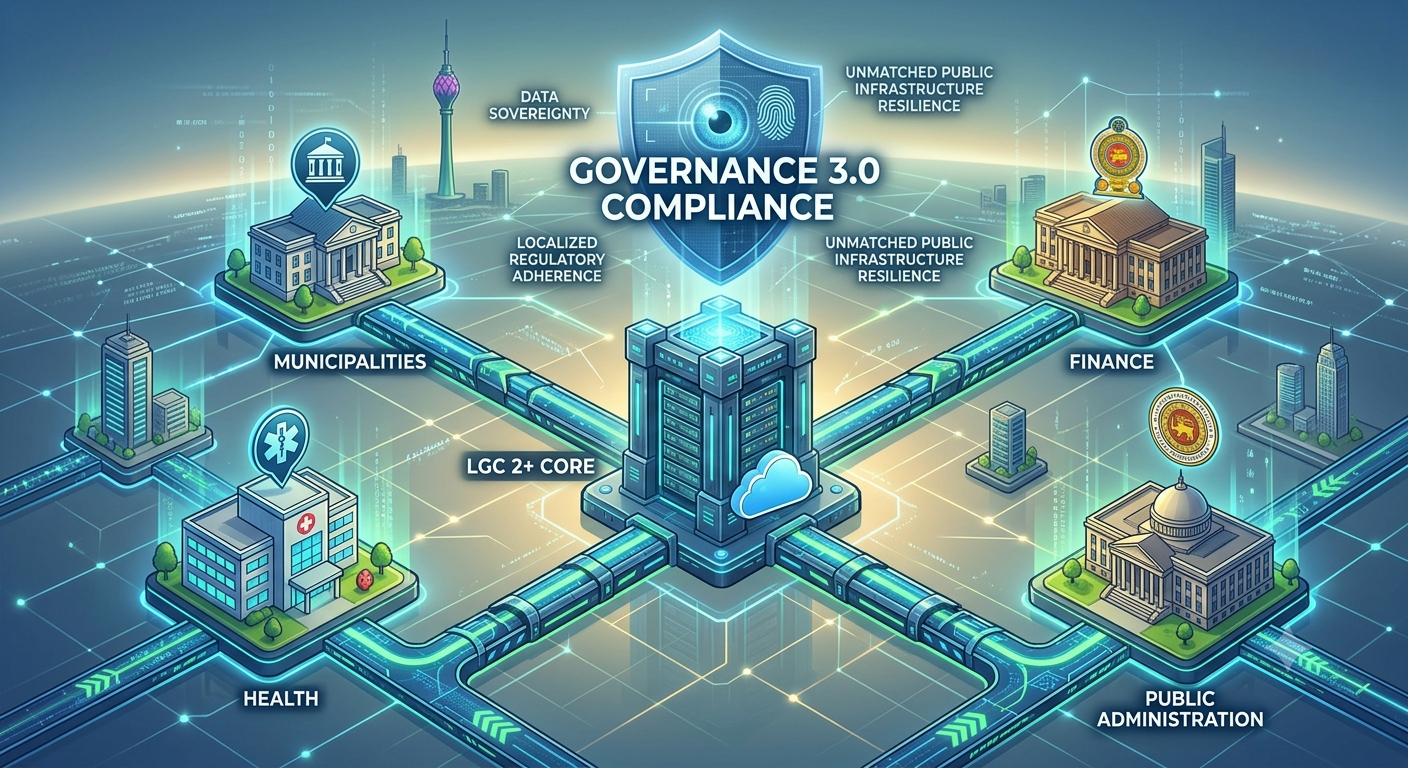
Conclusion: Embracing Governance 3.0
The launch of Lanka Government Cloud Version 2+ marks a defining milestone in Sri Lanka’s technological path. Moving into this infrastructure is more than a standard system update; it represents a fundamental modernization of how public administration serves its citizens. By integrating specialized software layers with the secure, scalable, and hyper-efficient architecture of LGC 2+, government departments can establish unmatched operational transparency, completely safeguard their digital boundaries, and drive localized digital innovation to unprecedented heights.
“The evolution to LGC 2+ represents a structural milestone in state management, where the combination of localized cloud sovereignty and agile software design forms the true backbone of an enduring, transparent digital nation.”