
Emet Inventory
Explore Emet Inventory—a stable, accurate and connected platform built to manage every inventory need with confidence.
Book a tour
Overview
Emet Inventory provides a stable and structured platform for managing your complete inventory operation—from goods received notes, stock issues and adjustments to item management, stock verification and detailed bin card records. With accurate transaction tracking and dependable stock visibility, your organization can maintain greater control across every stage of inventory movement.
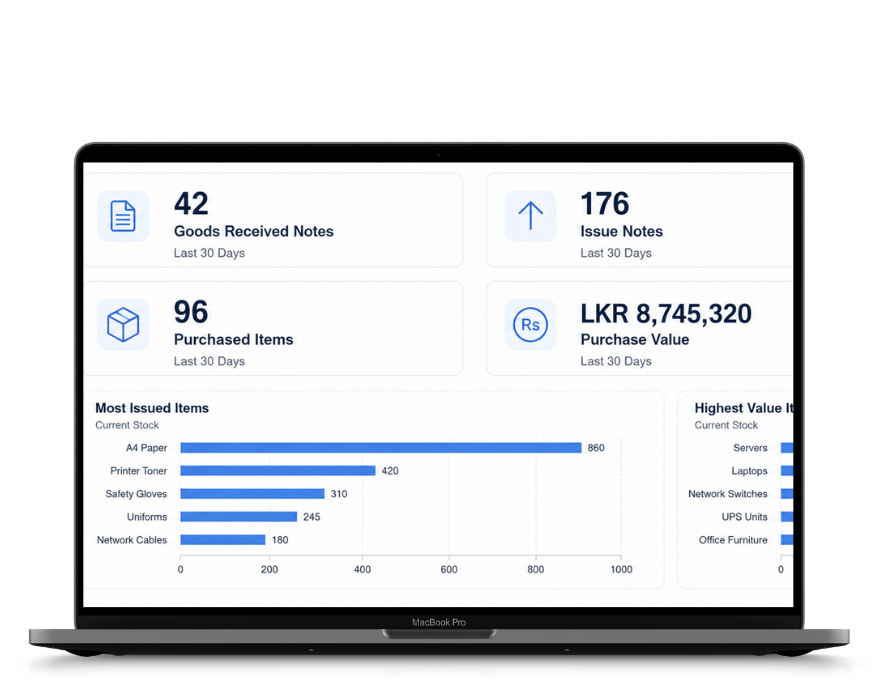
Powerful inventory capabilities for complete stock control
Manage inventory receipts, issues, item records, stock verification and connected operational processes through one dependable inventory platform.
Goods Received Notes
What is a Goods Received Note?
A Goods Received Note records items received from suppliers or other approved sources, including the accepted quantities and details of the delivery entering inventory.
Why do you need it?
A structured GRN process helps validate deliveries, identify discrepancies and ensure that received materials are accurately reflected in available stock.
How does Emet Inventory help?
Emet Inventory records received goods within a controlled process, helping organizations maintain dependable stock balances, traceable receipts and stronger internal control.
Stock Issuing
What is Stock Issuing?
Stock Issuing records materials released from inventory for departments, projects, employees or other approved operational requirements.
Why do you need it?
Every stock outflow must remain connected to its purpose and recipient. This improves accountability and prevents unexplained differences in available inventory.
How does Emet Inventory help?
Emet Inventory maintains a clear record of issued items, quantities, departments and operational purposes, providing stronger control over stock consumption.
Stock Adjustment
What is Stock Adjustment?
Stock Adjustment corrects inventory quantities when differences arise because of counting errors, damage, losses, returns or other authorized operational corrections.
Why do you need it?
Without a controlled adjustment process, incorrect balances can continue affecting replenishment, issuing, costing and management decisions.
How does Emet Inventory help?
Authorized corrections are recorded with their reasons and supporting details, preserving traceability while keeping system quantities aligned with actual stock.
Inventory Item Management
What is Inventory Item Management?
Inventory Item Management maintains the codes, names, categories, units, descriptions and stock settings required to identify and control every inventory item.
Why do you need it?
Receiving, issuing, verification, costing and reporting all depend on clean and consistently structured item information.
How does Emet Inventory help?
Emet Inventory provides a centralized item registry that improves consistency, reduces duplicate records and creates a dependable foundation for inventory operations.
Stock Verification
What is Stock Verification?
Stock Verification compares physically counted inventory with the quantities recorded in the system.
Why do you need it?
Regular verification identifies losses, posting errors and operational differences before they affect purchasing, issuing or financial reporting.
How does Emet Inventory help?
Emet Inventory supports structured stock counts, quantity comparisons and follow-up on discrepancies, helping management maintain confidence in recorded balances.
Reorder Level Handling
What is Reorder Level Handling?
Reorder Level Handling monitors available quantities against predefined minimum levels so replenishment can begin before important items run out.
Why do you need it?
Timely replenishment reduces stockout risk while helping the organization avoid holding unnecessarily high quantities.
How does Emet Inventory help?
Emet Inventory highlights items approaching their reorder levels, improving purchasing coordination and supporting more dependable material availability.
BIN Card
What is a BIN Card?
A BIN Card provides an item-by-item history of receipts, issues, adjustments and the running balance of stock.
Why do you need it?
Organizations need to understand not only the current balance but also the transactions and movements that produced that balance.
How does Emet Inventory help?
Emet Inventory maintains a detailed digital movement history for each item, improving traceability and making stock investigation and review more efficient.
Materials Requests
What is a Materials Request?
A Materials Request allows departments or authorized users to formally request items required from inventory.
Why do you need it?
A structured request process ensures that stock is issued against documented operational requirements instead of informal or untraceable requests.
How does Emet Inventory help?
Emet Inventory connects requests, approvals and stock issuing, strengthening coordination between departments and inventory stores.
Costing Calculations
What are Costing Calculations?
Inventory costing determines the financial value of available stock and inventory movements using the organization’s defined costing rules.
Why do you need them?
Accurate costing allows management to understand stock value, consumption cost and the financial impact of material usage.
How does Emet Inventory help?
Emet Inventory connects item quantities with material values, supporting dependable inventory valuation and clearer operational and financial reporting.
Management Reports
What are Management Reports?
Management Reports present stock balances, item movements, consumption, valuation and inventory status in a clear and decision-ready format.
Why do you need them?
Management requires more than raw transactions to identify shortages, usage trends, inactive stock and operational risks.
How does Emet Inventory help?
Emet Inventory transforms stock activity into structured reports that support planning, review and more informed inventory decisions.
Procurement Integration
What is Procurement Integration?
Procurement Integration connects stock requirements, purchasing, supplier orders and received materials within one operational flow.
Why do you need it?
Connecting inventory with procurement reduces duplicated work and improves visibility from the initial requirement to final receipt.
How does Emet Inventory help?
Emet Inventory connects material demand with procurement activity, improving replenishment planning and coordination between purchasing and stores.
Fixed Assets Integration
What is Fixed Assets Integration?
Fixed Assets Integration connects relevant inventory items with asset registration when materials move into long-term organizational use.
Why do you need it?
This connection preserves continuity between receiving an item through stores and maintaining it as a controlled organizational asset.
How does Emet Inventory help?
Emet Inventory supports a traceable flow from inventory handling to fixed asset management, strengthening control over valuable organizational resources.
HR Integration
What is HR Integration?
HR Integration connects inventory activity with employee, department and organizational structure information.
Why do you need it?
Linking issued items with responsible employees or departments improves accountability and makes operational usage easier to trace.
How does Emet Inventory help?
Emet Inventory aligns stock requests and issues with employee and departmental records, providing clearer responsibility for organization-controlled items.
Workflow Management
What is Workflow Management?
Workflow Management connects inventory requests, approvals, receipts, issues and adjustments with structured organizational processes.
Why do you need it?
Controlled workflows improve accountability, reduce processing delays and make the status of inventory activities easier to monitor.
How does Emet Inventory help?
Emet Inventory moves stock-related activities through defined approval and processing stages, improving governance across the complete inventory lifecycle.
Maintain the right stock levels
Keep essential materials available while reducing unnecessary stock accumulation across your organization.
Review historical stock movements and consumption patterns to support more accurate purchasing decisions.
Define reorder levels for individual items and identify materials that are approaching their minimum quantities.
Monitor available, received, issued and adjusted quantities through one consistent inventory record.
Maintain better control over fast-moving, slow-moving and critical inventory items.


Strengthen inventory profitability
Improve inventory efficiency with organization-wide visibility into quantities, movements, usage and material value.
View inventory across stores, departments and locations through one connected stock environment.
Understand the value of available stock through structured inventory costing calculations.
Identify slow-moving materials before they create unnecessary holding costs or become difficult to use.
Reduce avoidable emergency purchases, excessive quantities, unnecessary discounting and material write-offs.
Replace manual reporting with dependable insight
Move beyond disconnected spreadsheets with structured inventory records and decision-ready management reports.
Review current stock balances, receipts, issues, adjustments and consumption through standard inventory reports.
Access item-level BIN Card histories to understand how each recorded balance was created.
Compare physical stock counts with system quantities through a structured stock verification process.
Export inventory information to spreadsheets when further review, sharing or analysis is required.


Plan with greater accuracy
Reduce stockouts and excess inventory with reliable stock information, reorder controls and timely operational alerts.
Receive alerts when important materials approach their configured reorder or minimum stock levels.
Coordinate stock requirements with procurement activities before shortages disrupt operations.
Track batch-controlled inventory and maintain clearer visibility into relevant batch information.
Use movement histories, current balances and management reports to reduce overstocking and avoidable material write-offs.
See how organizations are making it happen with Emet Inventory
Discover how organizations use Emet Inventory to manage stock across locations with greater accuracy, control and visibility.

Integrated inventory management for CAASL’s international operations
CAASL supports aviation regulation, licensing and safety across Sri Lanka’s international aviation sector. Emet Inventory manages the stock required for these operations through one integrated system.
Read the e-article
Managing over 40,000 items across Jayakody Supermarket’s multi-location warehouses
Emet Inventory manages over 40,000 items across Jayakody Supermarket’s multi-location warehouses, providing accurate stock control and clear visibility across its supermarket operations.

Centralized inventory for Gangawata Korale PS
Emet Inventory helps Gangawata Korale PS maintain transparent and accountable records of government stock, materials and assets through one centralized system.
Read the e-articleLatest resources and media

Get started with EmetSoft
Book a tour to discover how EmetSoft can help you build a more stable, agile, and connected business with the flexibility and intelligent solutions needed for continuous growth.

FAQs
Emet Inventory helps organizations control stock more accurately by bringing receipts, issues, material requests, adjustments, item records, verification, costing and management reporting into one connected system. This improves stock visibility, accountability and operational control across departments and locations.
Yes. Goods Received Notes record materials entering inventory, including suppliers, quantities and delivery information. Stock issues record items released to departments, employees, projects or other approved requirements, creating a clear and traceable history of every stock movement.
Yes. Minimum and reorder levels can be maintained for inventory items. Emet Inventory identifies items approaching or falling below those levels, allowing purchasing and stores teams to begin replenishment before important materials become unavailable.
Emet Inventory supports structured physical stock verification by comparing counted quantities with system balances. When authorized corrections are required because of damage, loss, returns or counting differences, adjustments can be recorded together with their reasons and supporting information.
Yes. The digital BIN Card provides an item-by-item history of receipts, issues, adjustments and running balances. This makes it easier to investigate stock differences, review item usage and understand how the current quantity was calculated.
Yes. Emet Inventory connects item quantities with their material values to support inventory costing and valuation. Management reports provide information about stock balances, movements, consumption, inactive items, shortages, valuation and other important inventory conditions.
Yes. Emet Inventory can connect with procurement, fixed assets, HR and workflow management. These integrations help coordinate purchasing with stock requirements, transfer relevant items into asset management, link issues to responsible employees or departments and maintain controlled approval processes.