

The Hidden Cost of Manual Approvals
Strategic Insights | Operational Agility
Visualizing real-time tracking of blocked approvals and operational bottlenecks.
In many organizations, operational delays do not begin with major problems. They begin with a signature. Manual approval processes continue to slow down businesses across both private and public sectors.
Procurement requests, invoices, leave applications, and payments often move physically from desk to desk, causing unnecessary delays and reduced visibility. What appears to be a “small delay” can eventually lead to financial inefficiencies and reduced productivity.
The Operational Burden
Systemic risks of manual approvals:
- Slower decision-making and delayed procurement.
- Missed deadlines and reduced output.
- Financial inefficiencies and increased operational risk.
- Lack of real-time tracking and transparency.

Physical desk-to-desk hand-offs create invisible costs and operational uncertainty.
Workflow Automation as a Solution
One of the biggest challenges with manual approvals is the lack of real-time tracking. Employees frequently do not know who holds a document or why approval is delayed. Modern ERP systems solve this through workflow automation.

Comparing the cost of delay against the agility of intelligent digital workflows.
Digital approval workflows allow organizations to automate approval chains, receive notifications, and maintain audit trails. In today’s fast-moving environment, operational speed is no longer optional. Organizations embracing intelligent automation gain a critical advantage.
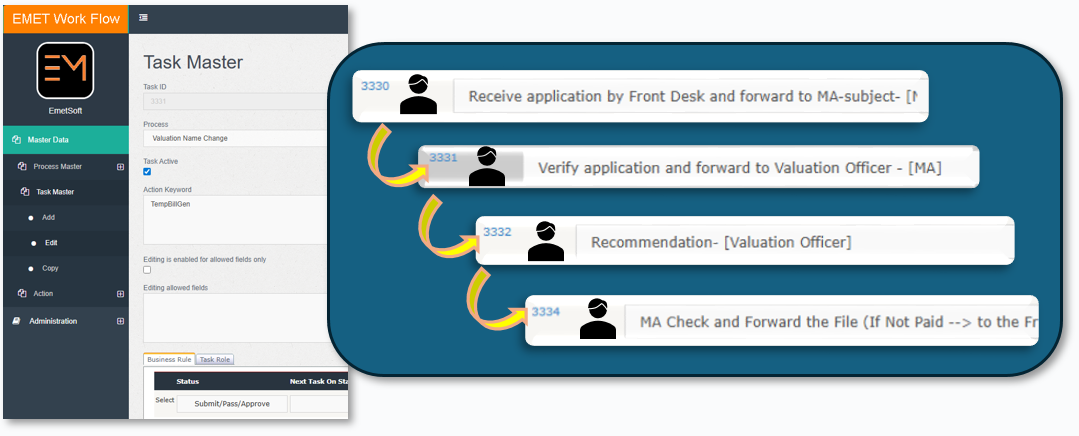
Automated task management ensures seamless hand-offs and transparency.