
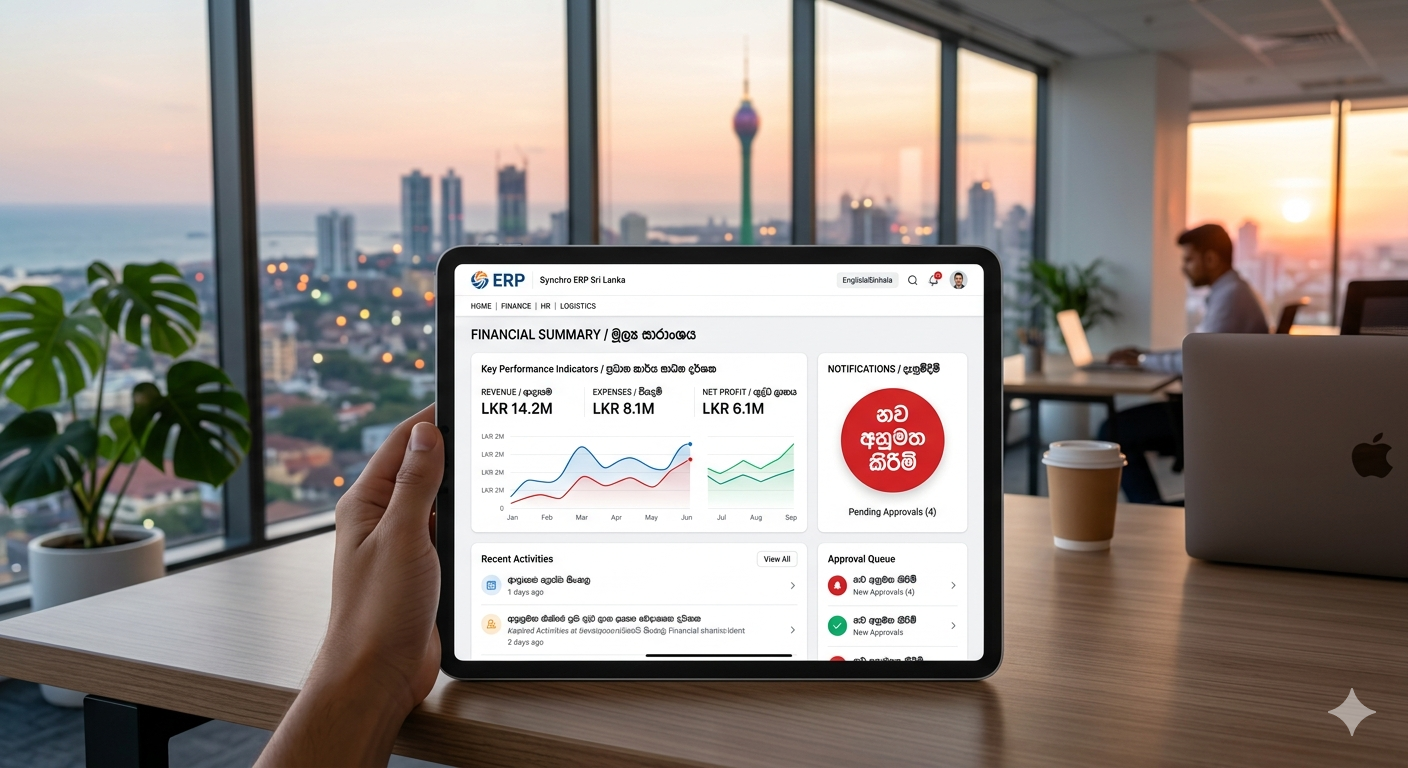
Why Sri Lankan Businesses Need Localized ERP Systems
Strategic Insights | Operational Agility
Bridging the gap: Bilingual interfaces empower the local workforce.
Many organizations assume international ERP systems automatically provide better solutions. However, in practice, localization matters far more than most businesses realize. Sri Lankan organizations operate within a unique business, financial, and regulatory ecosystem.
Tax structures, reporting requirements, and operational workflows in Sri Lanka often differ significantly from global templates. Local software provides a bridge that global platforms often struggle to build without expensive, time-consuming customizations.
The Compliance Advantage
A system that isn’t ready for VAT, SVAT, and SSCL on day one isn’t just a nuisance—it’s a liability. Localized ERPs are designed to align with the Inland Revenue Department (IRD) requirements, ensuring error-free financial management and simplified tax filing.
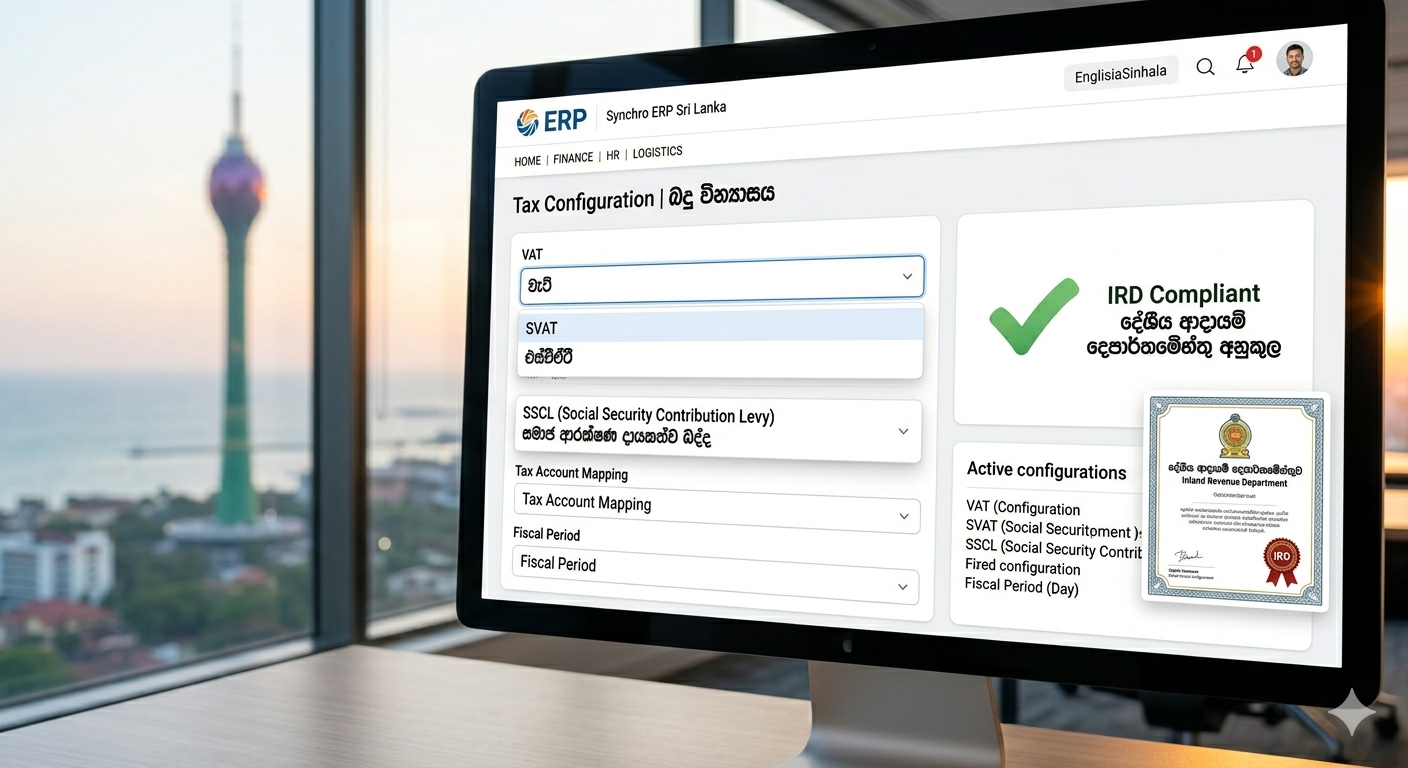
Built-in compliance for Sri Lankan tax structures like VAT and SVAT.
Core Benefits of Localization:
- Language Support: Sinhala and Tamil accessibility for wider user adoption.
- Regulatory Alignment: Native support for EPF/ETF and local labor laws.
- Cultural Context: Integration of local calendars and holiday structures.
- Cost Structure: Pricing and support models aligned with the local market.
Cultural and Linguistic Accessibility
Digital transformation is as much about people as it is about technology. When a system respects local languages and cultural nuances, resistance to change decreases. Localized systems allow employees to interact with technology in a way that feels natural and intuitive.
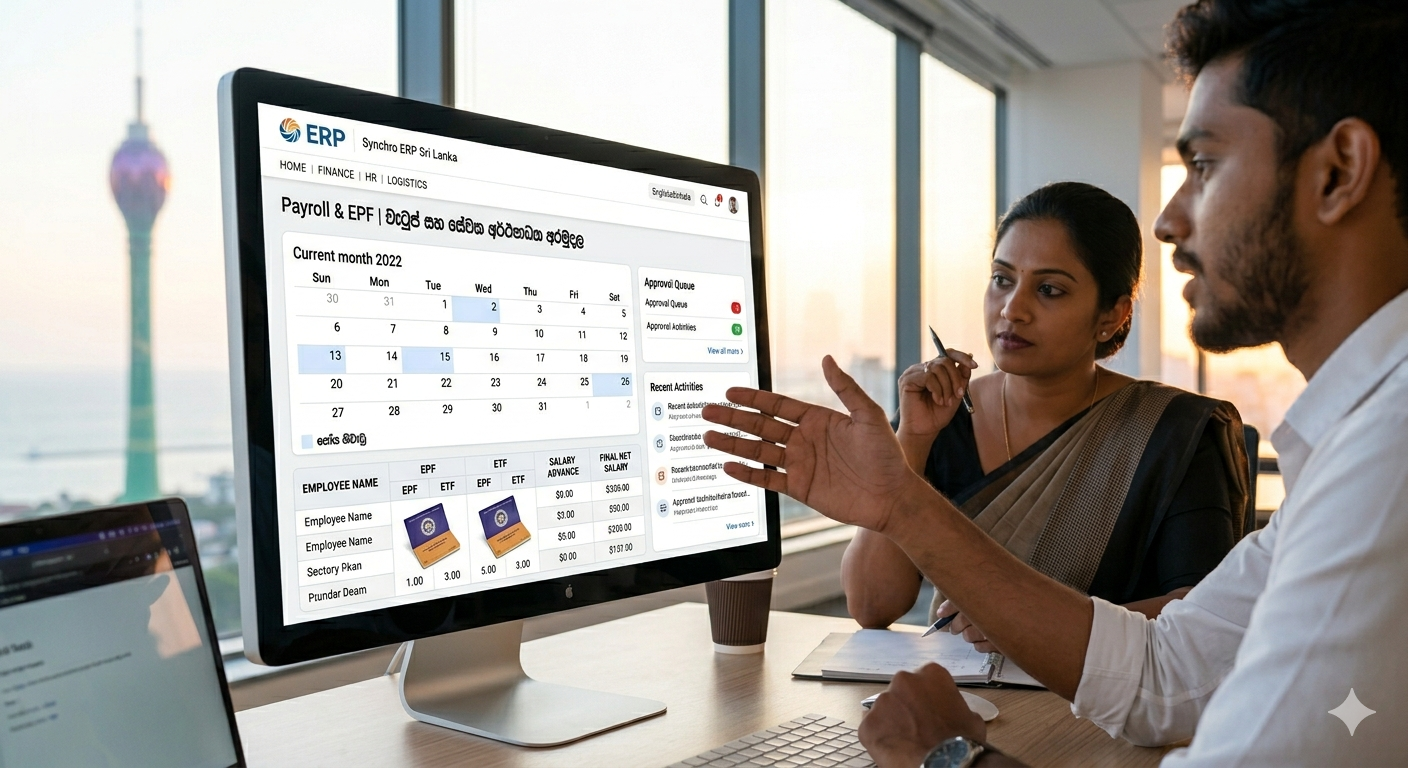
Respecting local labor laws through native EPF and ETF tracking.
Choosing a locally-developed ERP ensures that the solution understands Sri Lankan operational nuances, from port clearance tracking to regional branch management. It isn’t just about software; it’s about a partner who understands your journey.