

Bridging the Context Gap: Architectural Blueprint for Enterprise AI Grounded in Business Context
As organizations transition from localized Artificial Intelligence experimentation to full-scale corporate deployment, a recurring bottleneck emerges: Large Language Models (LLMs) operate with vast general intelligence but zero innate awareness of internal enterprise context. While off-the-shelf generative AI models can effortlessly summarize public web knowledge or generate syntactically correct software code, they falter when asked to navigate specialized ERP data structures, municipal revenue policies, or multi-tiered corporate authorization matrices.
Achieving true operational ROI requires moving beyond generic prompt engineering. Modern organizations must build context-aware AI ecosystems that seamlessly integrate structural domain logic, historical operational data, real-time telemetry, and enterprise-grade security protocols directly into the intelligence lifecycle.
1. The Context Deficit in Generic Enterprise AI
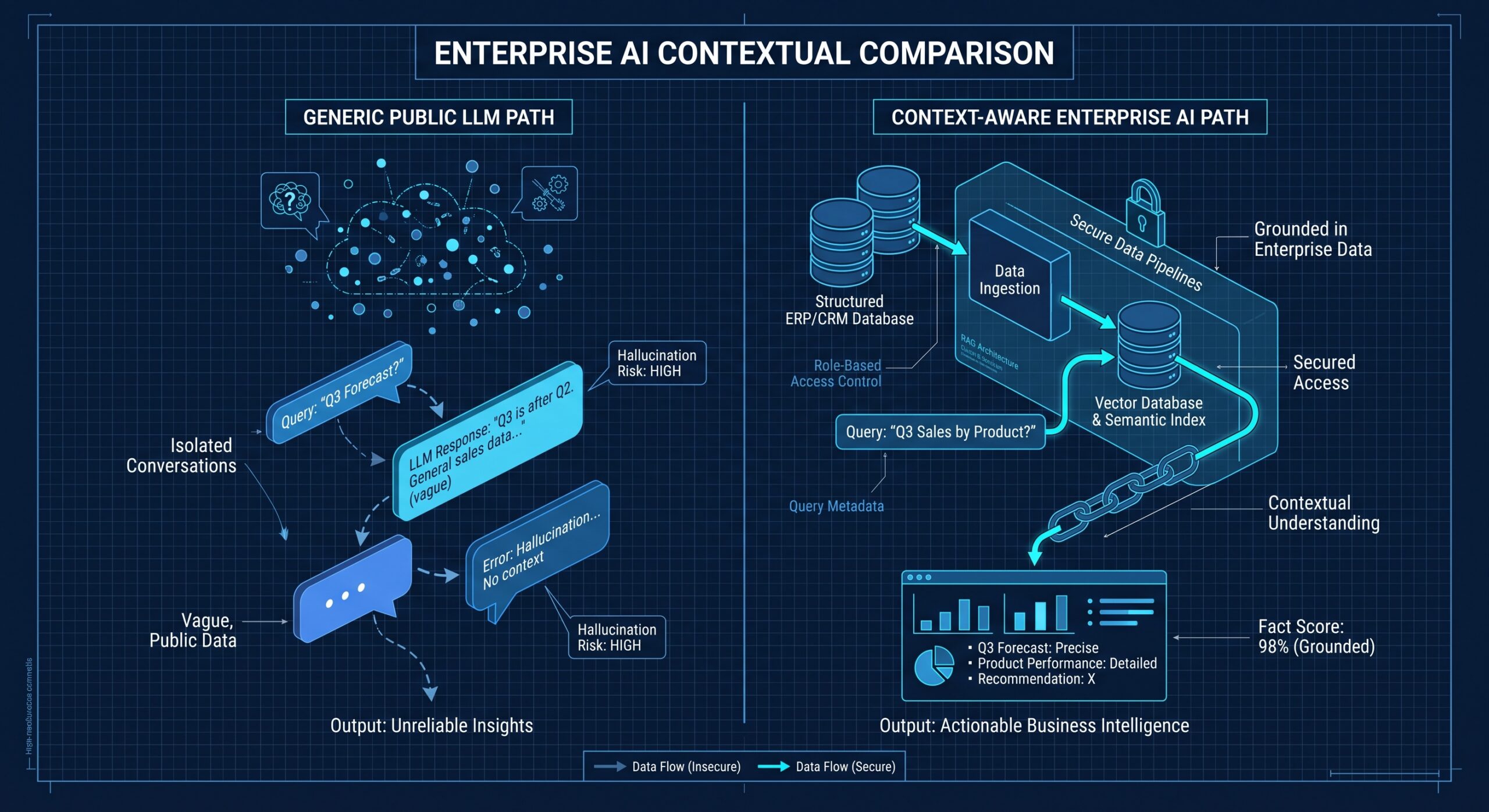
Generic foundational models are fundamentally trained to predict the next logical token based on statistically weight-adjusted internet data. When deployed natively within an enterprise environment, this architecture introduces three core vulnerabilities: systemic hallucinations, security compliance breaches, and lack of domain semantics.
Without grounding in live business data, an AI model will synthesize authoritative-sounding responses that do not align with company reality. For example, a query regarding procurement authorization limits might yield standard industry best practices rather than the specific financial threshold policies enforced by your organization’s internal ERP systems.
2. Core Architectural Pillars of Contextual AI
To successfully deliver enterprise AI with actionable business context, system architects must implement a four-pillar technological baseline:
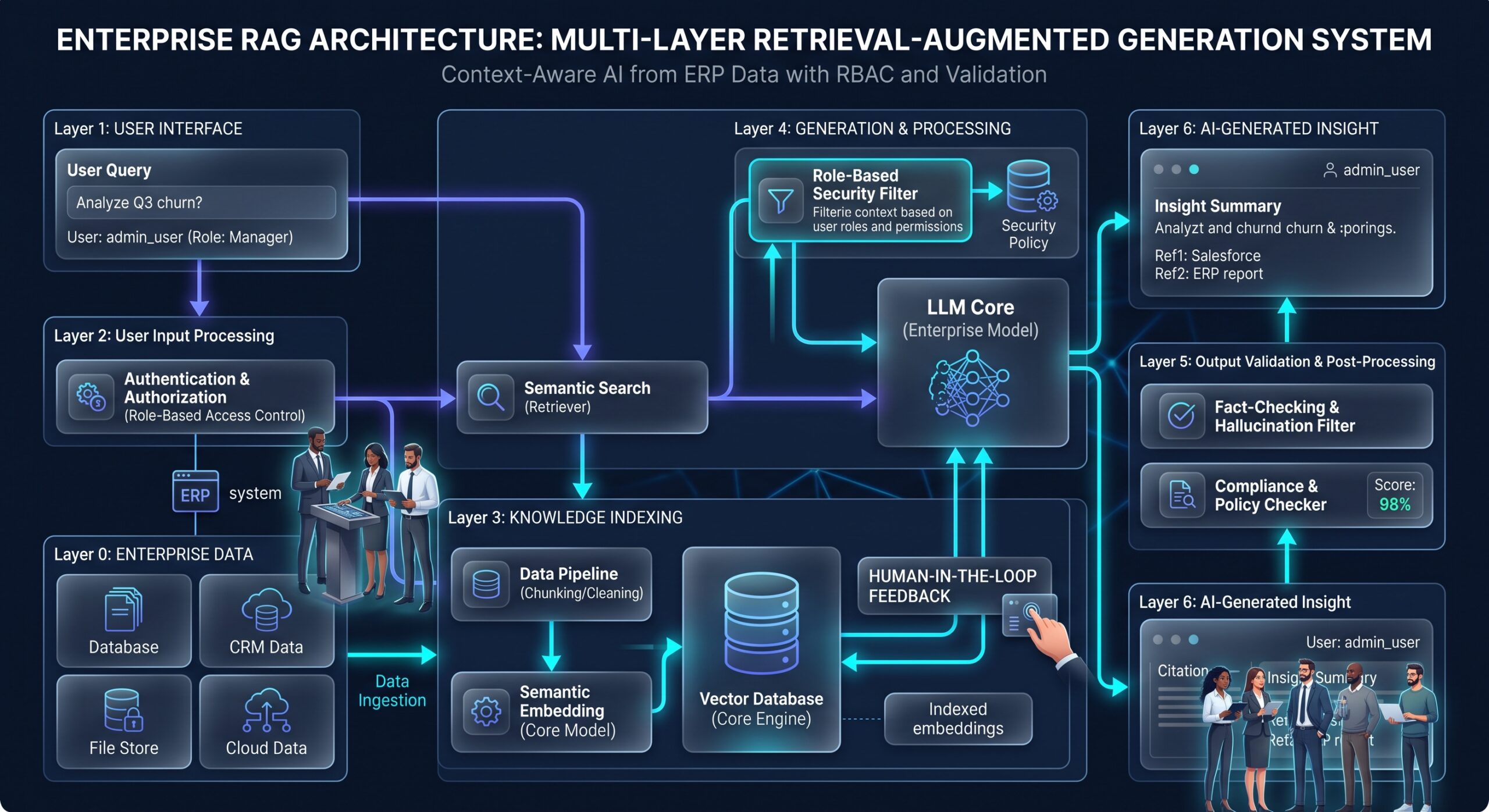
- Hybrid Retrieval-Augmented Generation (RAG): Combining dense vector retrieval (semantic searching) with sparse keyword indexing (exact term matching) to instantly locate relevant internal documents, ERP tables, and workflow logs before passing data to the LLM context window.
- Semantic Knowledge Graphs: Establishing structured entity relationships across disparate databases. A knowledge graph maps how a specific customer account connects to invoice histories, service level agreements (SLAs), and active regulatory constraints.
- Role-Based Context Filtering (RBAC at Inference): Enforcing user permission layers during vector retrieval. If an employee lacks authorization to view salary records or executive budget logs in the ERP, the vector database filters out those contexts before generation occurs.
- Live State & Telemetry Ingestion: Injecting transactional metadata (e.g., current server load, approval step status, local council zoning flags) into the active prompt payload to ensure outputs reflect real-time business conditions.
3. Operationalizing AI with Human-in-the-Loop Workflows
Deploying context-driven AI does not eliminate human governance; rather, it elevates human expertise. In mission-critical sectors such as public infrastructure management, financial compliance, and legal audit automation, enterprise AI must function as a co-pilot that presents verifiable reasoning alongside its outputs.
By attaching explicit citation metadata to every response generated, decision-makers can inspect the exact underlying database records or policy manuals utilized by the AI. This verifiable lineage creates trust, accelerates human review, and builds an audit trail essential for governance standards.

4. Technical Challenges, Security, and Governance Guardrails
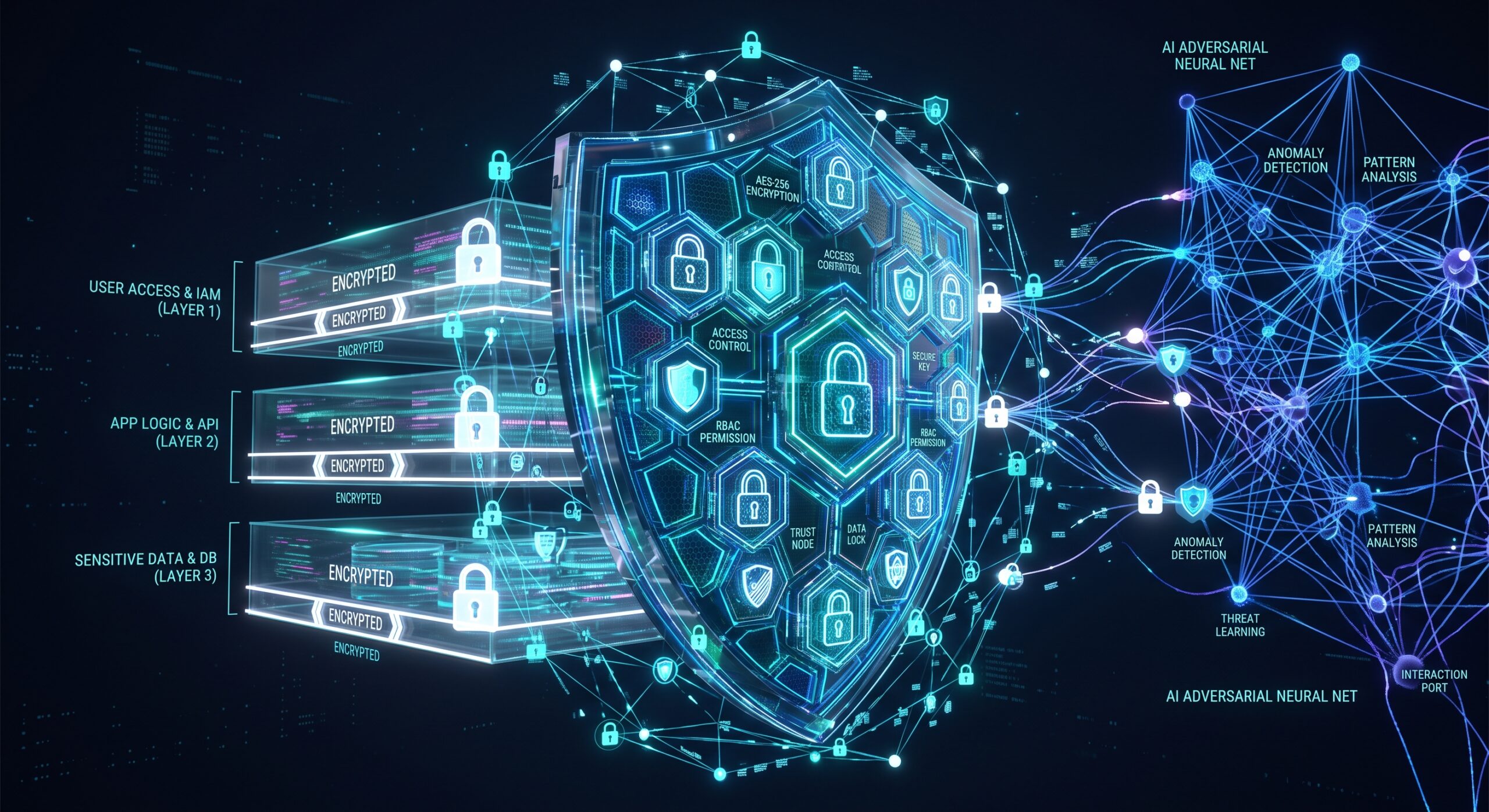
Integrating core business context into artificial intelligence introduces new cybersecurity and data architecture hurdles that demand specialized engineering solutions:
- Preventing Vector Data Leakage: Ensuring multi-tenant environments prevent semantic vectors from one department or tenant from leaking into unauthorized query streams.
- Embedding Drift & Schema Evolution: As internal ERP schemas and policy guidelines change, background background indexers must continuously recalculate vector embeddings without introducing downtime.
- Prompt Injection & Context Poisoning: Implementing strict validation filters on retrieved context to ensure malicious inputs hidden inside unstructured files cannot override systemic instructions.
5. How EmetSoft Empowers Enterprise AI Transformation
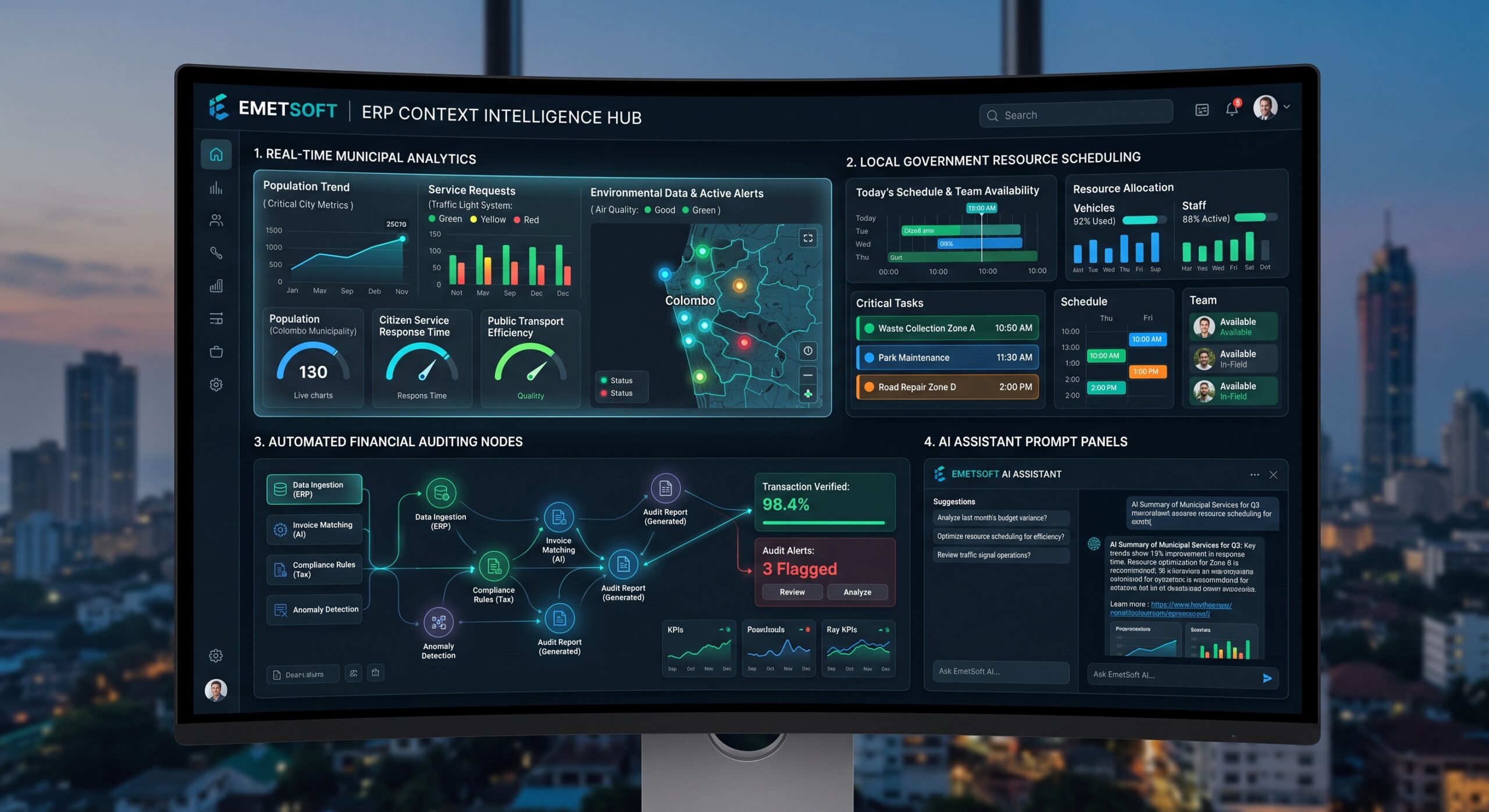
Integrating complex generative models with legacy databases, municipal enterprise resource planning (ERP) platforms, and rigid security frameworks requires deep domain expertise. This is where EmetSoft excels.
EmetSoft specializes in designing robust enterprise software architectures tailored for Local Government Authorities, public sector utilities, and complex enterprise environments. Our engineering team bridges the gap between static operational databases and context-aware artificial intelligence by providing:
- Custom Enterprise ERP & AI Bridges: Unifying fragmented organizational data into secure, high-performance RAG vector stores.
- Turnkey Governance & Security Wrappers: Implementing zero-trust permission models directly into your internal search and generative interfaces.
- Domain-Specific Fine-Tuning: Tailoring algorithmic semantics to understand complex local government regulations, property tax workflows, and public asset maintenance structures.
- Scalable Cloud & On-Premises Architecture: Engineering resilient software infrastructures that guarantee data privacy, compliance, and near-zero latency.
6. Conclusion
The enterprise AI landscape is rapidly evolving from generic conversational tools to deeply integrated context-aware systems. Organizations that prioritize grounding artificial intelligence in their unique business semantics, security boundaries, and operational workflows will secure a sustainable competitive advantage. By establishing robust data pipelines and partnering with technical experts who understand enterprise architecture, business leaders can transform raw generative power into reliable, strategic intelligence.
“The true power of Enterprise AI lies not in how much world knowledge it possesses, but in how precisely it understands your unique operational reality.”