

Modernizing Public Financial Management: The Evolutionary Journey of Treasury Operations Manager (TOM)
In the domain of public financial administration, the secure, transparent, and seamless management of government funds forms the foundation of sustainable economic governance. Originally conceptualized and deployed in 2005, the Treasury Operations Manager (TOM) platform was designed as a specialized financial management framework to facilitate digital transactions, streamline fund disbursements, and centralize transaction management across public sector institutions. Over two decades, TOM has served as a critical pillar in transitioning public financial operations from paper-heavy, fragmented manual processes to structured, electronic treasury workflows.
1. The Foundation and Historical Context of TOM (2005 – Present)
Prior to the establishment of dedicated treasury platforms, public sector financial operations encountered substantial systemic bottlenecks. Government payment disbursements, inter-departmental fund transfers, revenue accounting, and bank reconciliations depended heavily on physical voucher passes, manual signature verification chains, and paper ledger updates. This structural reliance caused processing delays, elevated administrative overhead, and exposed workflows to accounting discrepancies.
Launched in 2005, the Treasury Operations Manager (TOM) introduced a centralized framework that enabled government agencies to execute digital transactions securely. By integrating standardized transaction protocols and automated approval rules, TOM provided public treasuries with real-time fund monitoring, rigorous balance checks, and traceable transaction records.

2. Technical Architecture & Core Operational Workflow
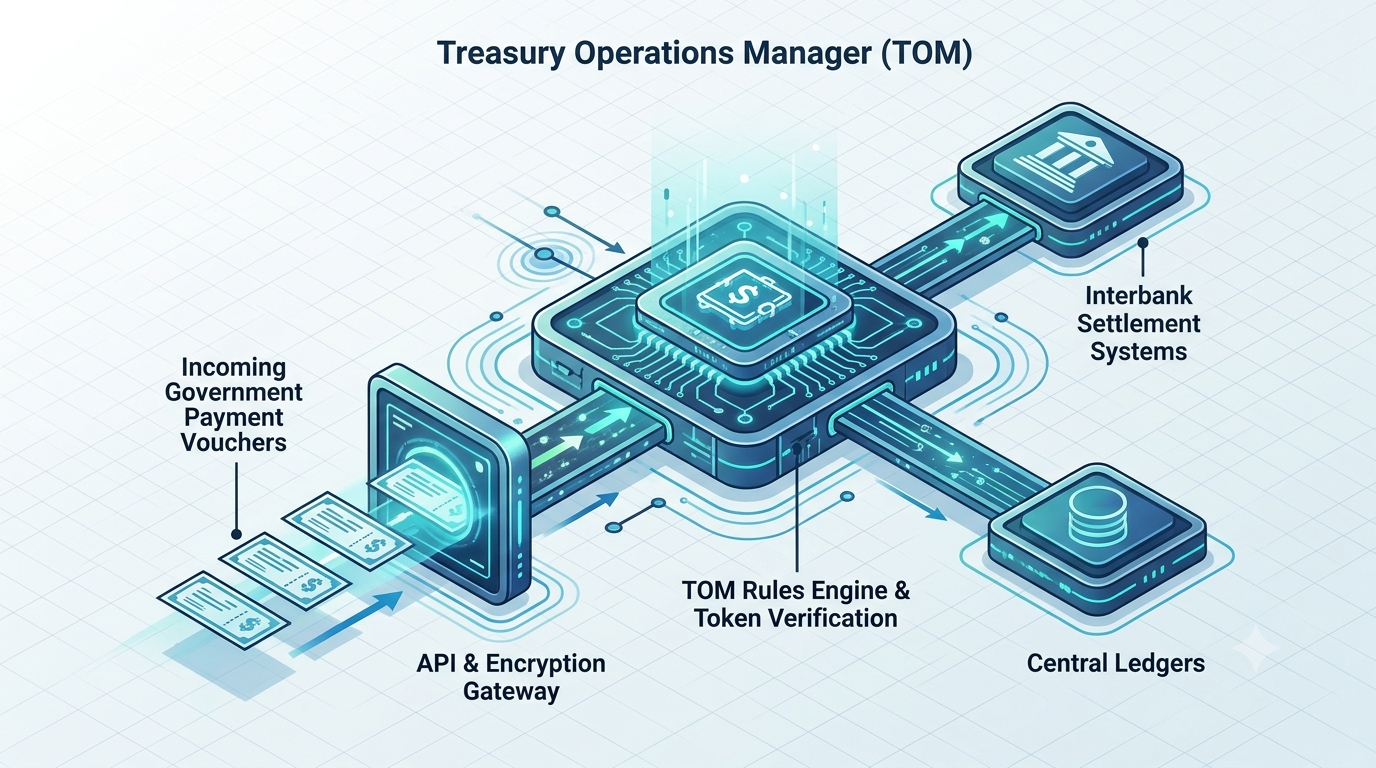
The Treasury Operations Manager operates through a multi-layered transactional pipeline designed to ensure high security, strict auditability, and immediate settlement verification. The platform handles four core operational pillars:
- Automated Fund Allocation & Disbursement: Validates budget allocations dynamically before authorization, preventing over-expenditure or unbudgeted fund releases.
- Digital Token Verification & Signature Security: Uses multi-tiered cryptographic token exchange to ensure every payment voucher carries authenticated digital approvals.
- Real-Time Interbank Gateway Connectivity: Connects public accounts directly with central banking networks and authorized commercial banking channels to execute zero-latency electronic transfers.
- Automated Ledger Reconciliation: Reconciles daily transaction feeds against central treasury ledgers, automatically generating audit logs and flagging discrepancies.
3. Bridging Legacy Systems with Next-Generation Governance
While the initial implementation of TOM in 2005 revolutionized government transaction handling, modern public finance environments require continuous updates. Today’s public entities require seamless integration with cloud infrastructure, AI-driven fraud detection, intelligent document processing, and localized multi-currency taxation frameworks.
Upgrading legacy treasury infrastructure requires preserving historical ledger integrity while extending interoperability to government ERP systems, utility payment portals, and mobile platforms used by other authorities.
4. How EmetSoft Can Help Modernize Government Operations
With extensive experience in deploying specialized Enterprise Resource Planning (ERP) solutions and FinTech platforms for Sri Lankan public sector authorities, EmetSoft provides the technical foundation needed to modernize the platforms like TOM into highly scalable, future-proof ecosystems:
- API-Driven Platform Modernization: EmetSoft builds secure RESTful API bridges that seamlessly connect legacy treasury databases with modern banking networks, LankaPay GovPay+, and municipal ERP modules.
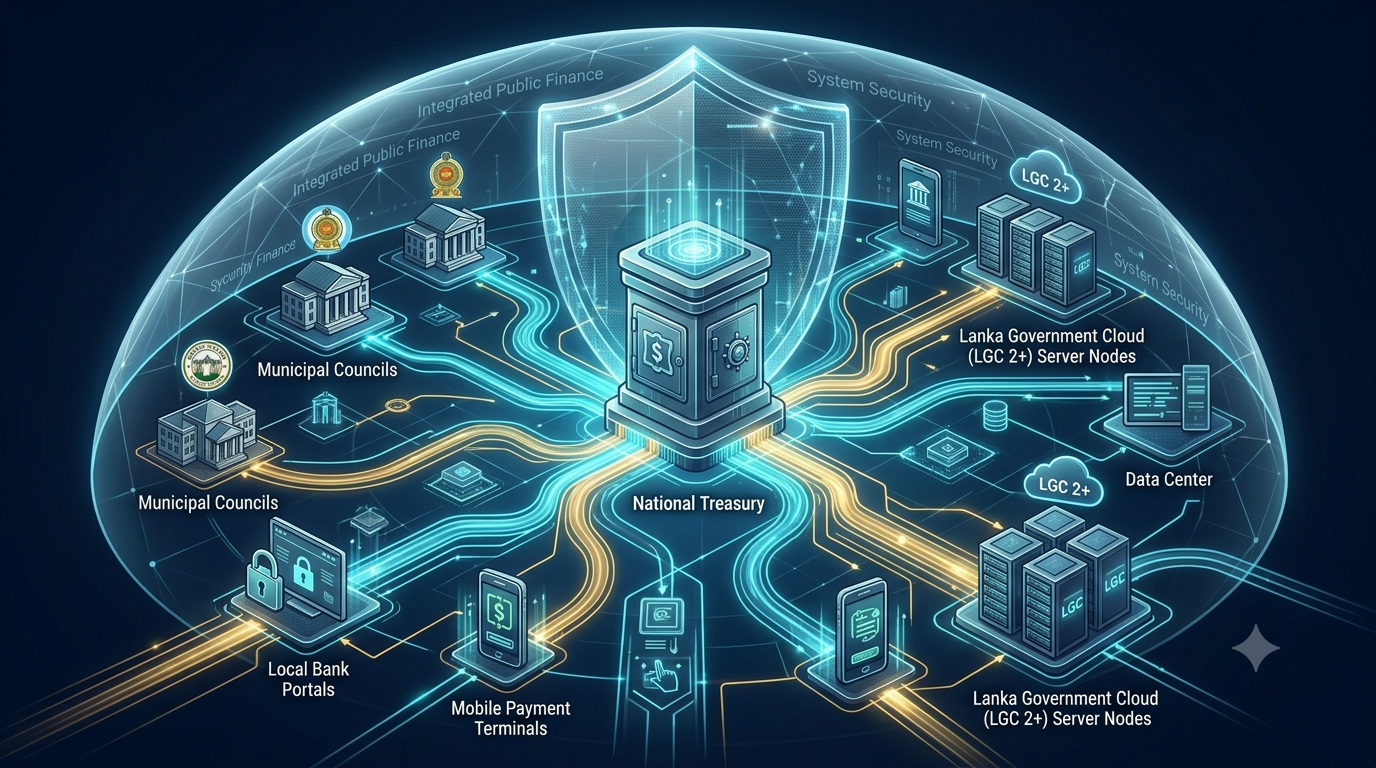
- Cloud 3.0 & Data Sovereignty: We facilitate smooth migration to sovereign cloud platforms (such as Lanka Government Cloud – LGC 2+), ensuring complete compliance with national data security regulations and zero latency.
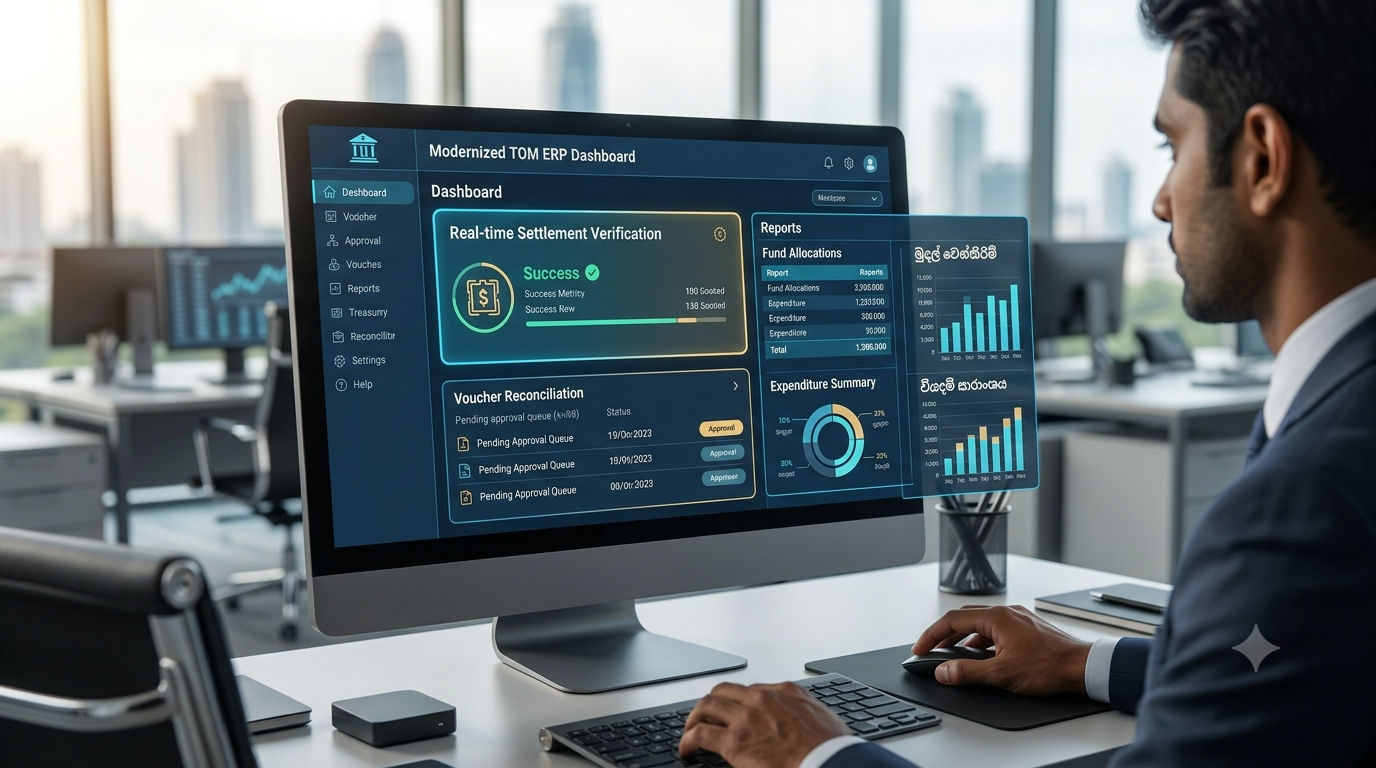
- Intelligent Document Processing (IDP): Replacing manual paper-voucher audits with AI-powered document extraction engines that automatically recognize, validate, and record payment vouchers in real time.
- Bilingual & Localized Governance Modules: Customizing dashboards with full English, Sinhala, and Tamil localization, incorporating local tax rules (VAT, SVAT, SSCL) and public sector accounting standards.
- End-to-End System Security: Implementing Zero-Trust architecture, multi-factor authentication, and immutable audit logs to protect critical financial infrastructure against cyber threats.
5. Conclusion
The implementation of the Treasury Operations Manager (TOM) in 2005 marked a milestone in digital government finance. As public sector operations continue to evolve, modernizing legacy systems into integrated, real-time digital financial ecosystems is essential. By coupling robust treasury protocols with cutting-edge ERP integration, public sector institutions can achieve total financial transparency, operational agility, and exceptional public service delivery.
“The evolution of public treasury management lies in transforming static, historical ledgers into dynamic, real-time digital ecosystems that ensure total financial transparency and operational agility.”